
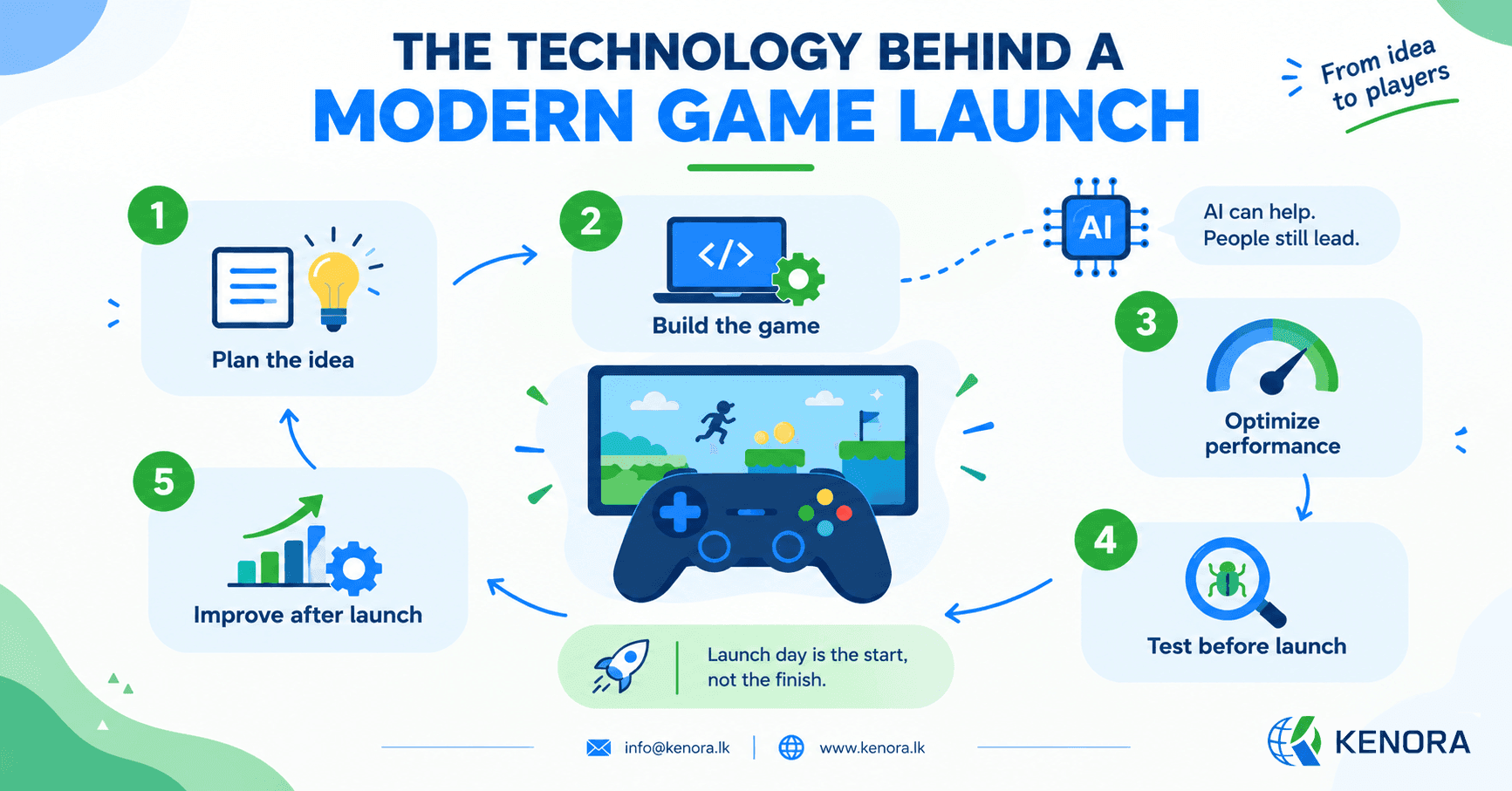
The Technology Behind a Modern Game Launch
Imagine you spend months building a game. The characters look great, the gameplay is fun, and everything runs perfectly on your computer. Then launch day comes, and players start sharing their problems. The game crashes, loading takes forever, or the controls just don’t feel right.
To players, it feels like a bad launch. To developers, it can mean weeks of fixing problems that could have been caught earlier.
That’s why a good launch takes more than code and nice graphics. Behind every smooth release is a process that mixes creativity, technology, testing, and planning. So what really happens before a game reaches players? Let’s walk through it.
1. Every Game Starts With a Clear Idea
Before building anything, a team needs to know what they want to make. Is it a mobile puzzle game, a multiplayer adventure, or a story-driven game for PC? Who will play it? What will make them come back tomorrow?
Answering these questions shapes everything that comes next. Most teams then build a small, playable version with only the core features. This is called a prototype.
Say your game is about a character jumping between platforms. With a prototype, you can test the jumping first, before you design every level, character, and background. If it isn’t fun yet, this is the cheapest time to change it.
A good game doesn’t start with more features. It starts with one strong idea that works.
2. Bringing the Game to Life
Once the idea works, the team starts turning it into a full experience. Game engines like Unity and Unreal Engine help them build worlds, animations, and gameplay systems.
Everyone has a part to play. Artists create the look. Designers shape how the game feels. Developers write the code that holds it all together.
Small details matter more than you might think. How a character moves, the sound of picking up a coin, how fast a button reacts: these little things decide how a game feels. Picture a mobile game with slow controls and confusing menus. Many players would leave before they ever see what makes it special.
The real challenge is getting every part to work together, so the game feels natural to play.
3. Making the Game Run Smoothly
A game can look great on a powerful computer, but players use all kinds of devices. Some phones have limited memory and weaker processors. Others have big screens and strong graphics. A game that runs well on one phone may struggle on another.
That’s where performance optimization comes in. Developers check loading times, frame rates (how smoothly the game moves), and memory use. They might shrink some images, change how objects are drawn, or tone down effects that use too much power. On mobile, they also keep an eye on battery drain and heat.
The goal isn’t always the most realistic graphics. It’s a smooth experience on the devices the game is made for. A game that loads fast and responds well gives players one less reason to quit.
4. Testing Before the Big Day
Testing is one of the most important steps before launch. Testers play through every part of the game, try odd actions, and hunt for problems.
They might find a level that can’t be finished, a character stuck behind an object, or a crash when the player goes back to the main menu. Fixing these before release is much easier than fixing them after thousands of players run into them.
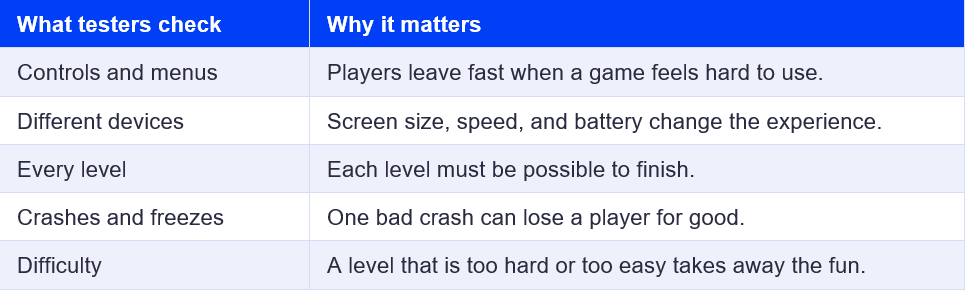
Testing isn’t only about bugs, either. It shows whether the game is fun and easy to use. A level can work exactly as designed and still feel way too hard. Player testing helps catch that. Here is a quick look at what testers usually focus on:
5. Preparing for Launch Day
When development and testing are almost done, the team gets the final release ready. They create the final build, check the settings, prepare store images, and write the game description. They also make sure the game meets the rules of the platform it is going on.
Then comes an important question: what if something goes wrong? A bug might only show up on certain phones. An online game might struggle when lots of players join at once. A last-minute change might break something new.
So teams make a plan. That can mean having fixes ready, watching crash reports, and being able to push an update quickly. A successful launch is more than pressing the publish button. It’s being ready for what comes next.
6. What Happens After the Game Goes Live?
The first day after launch teaches a team a lot. Players use features in ways nobody expected. Some struggle with the controls. Others find bugs that never showed up in testing.
Teams learn from player feedback and performance data. If many players quit at the same level, maybe it’s too hard or not explained well. If crashes happen on certain devices, developers can dig into the cause. Then updates can improve stability, fix issues, and add new content.
For games that keep growing after release, this becomes part of the long-term plan.
Launching a game is the start of its journey, not the end.
7. How AI Is Changing Game Development
AI tools are now part of the process too. They can help developers explore ideas, support coding tasks, create early concepts, and speed up repetitive work. For small teams with limited time and budget, that can be a real help.
But AI can’t promise that a game will be fun, secure, or free of bugs. Generated code still needs to be checked. Creative choices still need someone who understands the players. And a feature that looks amazing in a demo may fall apart in the real game.
The smart way is to use AI where it helps, and keep people at the center, with their creativity, testing, and decisions. Technology can make some parts faster, but it’s still the team that turns all the parts into a complete game.
Final Thoughts
A modern game launch brings many skills together. It starts with an idea, grows through design and development, and gets ready through testing, performance work, and careful planning.
Players rarely see this work. They just expect the game to open, run well, and give them a reason to keep playing. Great graphics may catch someone’s eye, but a smooth and enjoyable experience is what stays with them.
At Kenora, our Mobile & Game Development team brings technology and creative ideas together to build interactive digital experiences. From the first concept to the final release, we care about every step that turns an idea into something people enjoy.
A great game launch isn’t just about releasing a game. It’s about making players glad they downloaded it.