
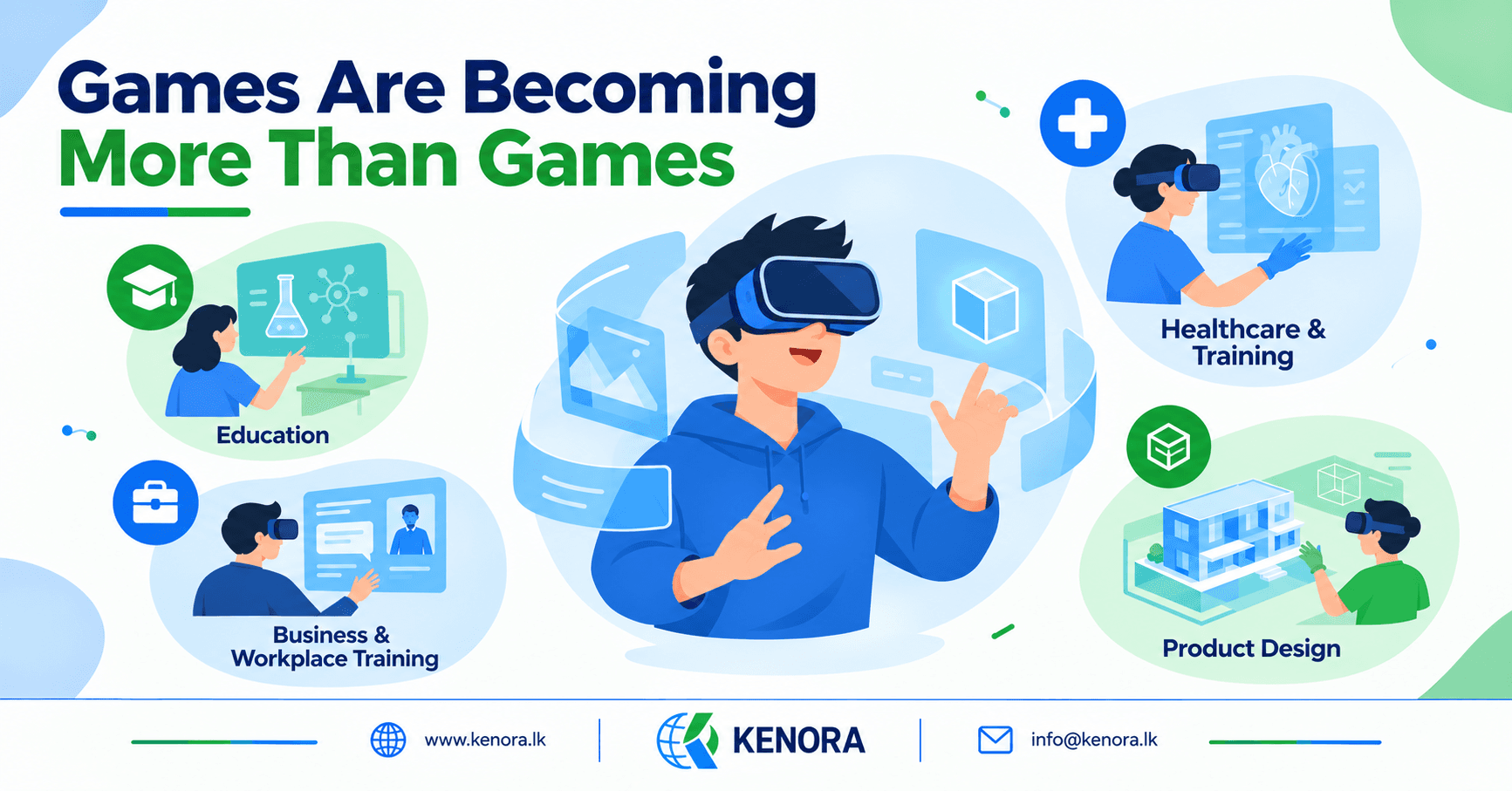
Games Are Becoming More Than Games
Picture learning to fly a plane without ever leaving the ground. Or practicing on a complex machine where one wrong move costs nothing.
It sounds like something from a video game, and in a way it is. Game technology already makes this possible.
Games are not just for fun anymore. The tools used to build them now help people learn new skills, practice real tasks, explore products and solve problems in many industries. From schools to hospitals, game technology is making digital experiences more useful.
So how does it work, and where is it going? Let's take a look.
Games Are Changing How People Learn
Most of us learn by reading instructions, watching a video or listening to someone explain. These ways work well, but sometimes information is not enough. People also need a chance to try things for themselves.
Flight simulators are a good example. Pilots can practice in a virtual world before they touch a real aircraft. They face different situations, learn how to react and get better, all without the risks of a real flight.
The same idea works in other areas too. Students can learn through interactive challenges. Workers can practice with equipment in a virtual space. Medical trainees can go through simulated cases before they meet real patients.
The goal is not to turn everything into a game. It is to give people a better way to practice and understand what they are learning. Sometimes doing something is simply more useful than reading about it.
Game Technology Is Moving Into New Industries
Modern games use many technologies, such as 3D graphics, animation, physics, artificial intelligence and real time interaction. These tools no longer stay inside games. Here are four areas where they are already making a difference.
1. Education
Learning gets more interesting when students take part instead of just watching or reading. Think of a science lesson where students explore a virtual lab, test their ideas and see what happens next.
Interactive tools can make hard topics easier to see and understand. They also give students room to make mistakes and try again, which is a big part of learning.
But a good educational game needs more than nice graphics. It has to help students understand the subject and reach a clear learning goal.
2. Healthcare and Training
Training for some jobs is expensive, difficult or risky. Virtual simulations let people practice certain tasks in a safe and controlled space. Healthcare trainees, for example, can use them to learn procedures and practice making decisions.
These tools do not replace real training or expert guidance. They simply give people extra experience before they face real situations.
3. Business and Workplace Training
Businesses can use game technology too. Take a new employee who has to handle a difficult customer conversation. Instead of only reading a training document, they can practice in an interactive simulation and try different replies.
Teams can use the same approach to rehearse safety steps, prepare for emergencies or learn how to deal with technical problems. People can test their choices and learn from the results without causing any real world trouble.
4. Product Design
Game technology can also help people explore products and places before they exist. With 3D environments, a company can build a virtual model of a building, a product or a workspace. Designers and customers can walk through it, check the details and suggest changes.
This is often easier to understand than flat pictures or long written descriptions. It also helps teams spot possible problems early in the design process, when they are cheaper to fix.
AI Is Adding New Possibilities
Artificial intelligence adds another layer to game technology. In many traditional games, characters follow planned actions. With AI, developers can build characters that react to players in a more flexible way, and experiences that change based on the choices people make.
Think of a learning game that notices a student is struggling and offers an easier challenge before moving on. Or a training simulation where the next situation depends on the decisions a person just made. Ideas like these can make digital experiences feel more personal and more useful.
AI can also help developers with parts of the creative process, like coming up with ideas, testing certain features or handling repeat tasks.
But AI is not a magic fix. Developers still need to check the results, protect user information and make sure everything works as expected. The best use of AI is not adding more technology for the sake of it. It is using technology to solve a real problem.
Why Good Development Still Matters
Even the best technology cannot save a badly designed product. An app can look impressive and still be hard to use. A learning game can be fun and still teach nothing useful. A mobile game can grab attention at first and then lose players because it feels confusing or repeats itself.
That is why good development starts with the user. Who will use the product? What problem should it solve? What should people be able to do after they use it? Answering these questions before the building starts leads to better choices.
Testing is just as important. Real users often do things the development team never expected. Their feedback can show confusing controls, slow performance or features that do not work the way they should.
A great digital experience is not only about how it looks. It is about how well it works for the people using it.
The Challenges Behind the Technology
Game technology offers exciting chances, but it comes with challenges too.
Building detailed 3D environments and interactive simulations can take a lot of time, money and special skills. Some experiences also need powerful devices that not everyone has. Privacy and security matter as well, especially when an app collects personal information or is used for workplace training.
Businesses also need to ask one honest question: does this technology really help? A virtual experience may look amazing, but that does not mean it improves learning or saves time.
The best projects start with a clear purpose. The technology should fit the problem, not the other way round.
What This Means for Businesses
A business does not need to build a traditional video game to benefit from game development technology. A company might need an interactive product demo, a training simulation, a learning app or a mobile experience that helps customers understand a service.
Every project has a different goal, so the right solution depends on what users need.
This is where game development and software development can work together. Skills like animation, interactive design, 3D graphics and performance testing can help create useful products for many different purposes.
For technology companies like Kenora, this opens the door to exploring how interactive experiences can support real business needs. The key is to understand the problem first, and then choose the right tools to solve it.
The Future Is Bigger Than Entertainment
Games have changed how people play, connect and spend their free time. Now the technology behind them is opening doors far beyond entertainment. AI, interactive software, 3D environments and mobile technology give developers new ways to build useful digital experiences.
Not every problem needs a game based solution. Sometimes a simple application is all you need. But when people want to practise, explore, learn or interact with something in a new way, game technology can offer things that traditional tools cannot.
The next big use of game technology may not be a game someone plays after work. It could be an app that helps a student understand science, a worker learn a new skill, or a business show customers how a product really works.
Games are becoming more than games because the technology behind them can do much more than entertain us.
And for developers, that means the next exciting project might not look like a game at all.