
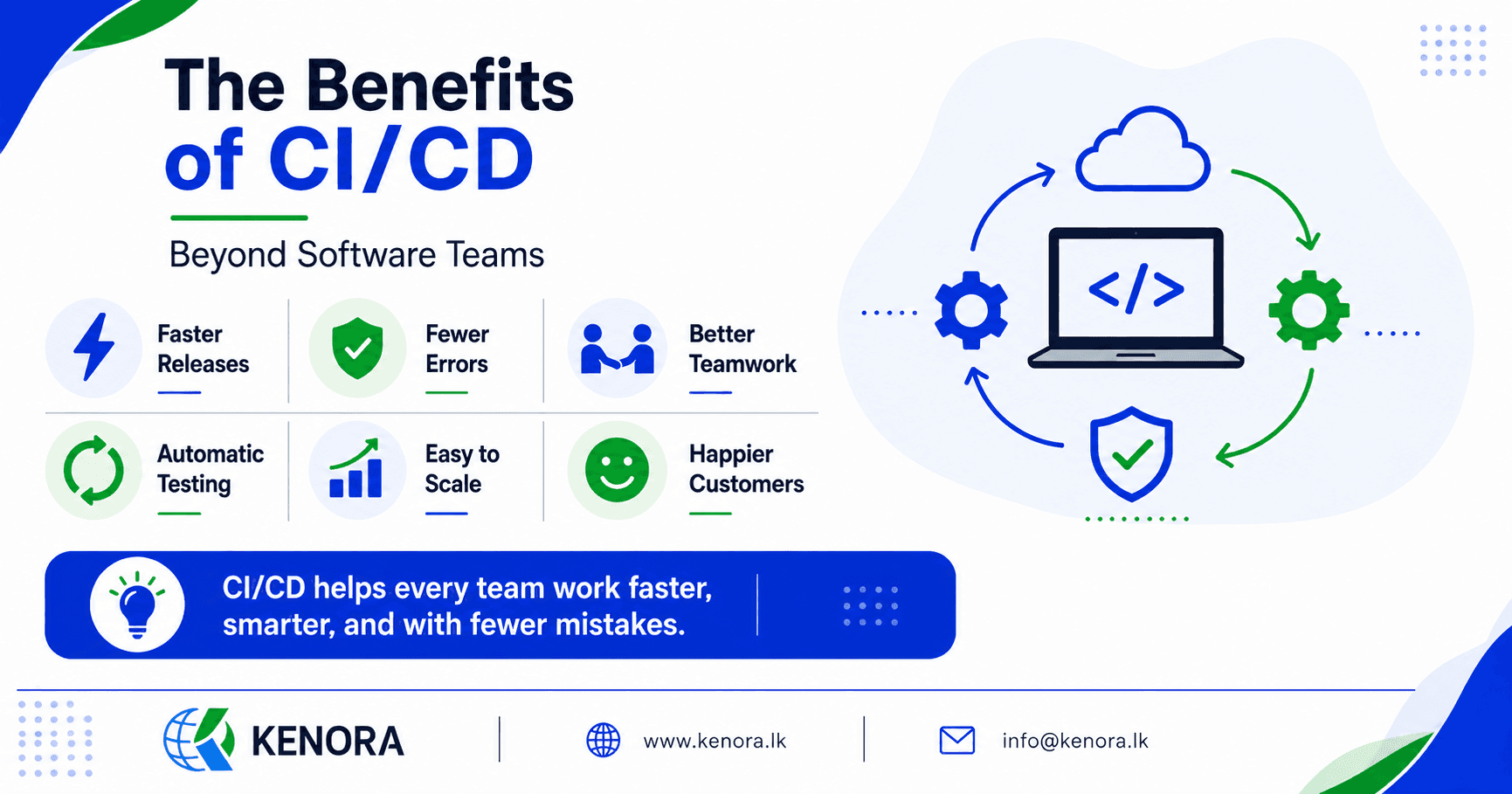
The Benefits of CI/CD Beyond Software Teams
Picture this: your company has spent weeks building a new feature. The development team finishes the work, everyone is excited, and the update finally goes live.
Then the phone starts ringing. Customers report problems, some features stop working, and the support team gets flooded with complaints. Developers rush to fix issues while managers push back other projects to focus on the fire.
A release that should have felt exciting turns stressful instead.
This happens more often than most businesses realize, and usually the problem isn't the software itself. It's how the software gets delivered. That's where CI/CD makes a real difference.
Many people think CI/CD is something only developers care about, but that's not true. A good CI/CD process improves communication, cuts down on mistakes, saves time, and helps every department work better together. Whether your company has ten employees or ten thousand, CI/CD can make daily work smoother and help your business grow with more confidence.
What is CI/CD
CI/CD stands for Continuous Integration and Continuous Delivery. The names sound technical, but the idea behind them is simple.
Continuous Integration means developers add their work to the main project regularly instead of waiting until everything is finished. Every small change gets checked automatically, so if something breaks, the team finds out right away instead of weeks later.
Continuous Delivery means those tested changes stay ready to release at any time. Instead of waiting for one huge update every few months, businesses can ship small improvements whenever they're ready.
Think of it like maintaining a car. Service it regularly and small problems get fixed before they turn into expensive repairs. Ignore maintenance for a year, and fixing everything at once becomes stressful and costly. Software works the same way: small, regular improvements are easier, safer, and more reliable than one massive update.
Why Traditional Releases Create Problems
Many businesses still follow the old release process: developers work for weeks, testers wait until everything is complete, managers schedule one big release, and customers get every new feature at once.
It sounds organized, but it often creates unnecessary risk. When hundreds of changes go out together, finding the cause of a problem becomes difficult. If one feature fails, it can drag others down with it, and the team spends days hunting for the issue instead of improving the product.
Large releases also create pressure. Everyone dreads release day because a single mistake can affect the whole business. With CI/CD, those stressful releases become smaller, simpler, and much easier to manage.
Small Changes Lead to Big Results
One of the biggest strengths of CI/CD is releasing work in small pieces. Instead of waiting months to launch ten new features, businesses can release one improvement at a time.
This approach comes with real advantages: problems are easier to spot, customers receive improvements more often, teams gain confidence because each release is smaller and safer, and managers can see progress clearly instead of waiting months for results.
Over time, these small improvements add up to real business value.
CI/CD is Not Just for Developers
This is probably the biggest misunderstanding about CI/CD. People hear “Continuous Integration” and immediately think of programming, but in reality every department benefits.
Project Managers
Project managers get better visibility. Instead of wondering when work will finish, they can check progress every day, which makes planning easier and cuts down on unexpected delays.
QA Teams
Testing becomes far more efficient. Automated checks catch common issues before a human even looks at the software, freeing up testers to focus on real user experience problems instead of repeating the same manual checks.
Customer Support
Support teams field fewer complaints because updates are more stable, and when issues do appear, developers can fix them quickly. Customers notice the faster response and the improved reliability.
Business Leaders
Business owners can respond to market changes much faster. If customers ask for a new feature, the company doesn't have to wait months to deliver it, and quick improvements build happier customers and stronger relationships.
Sales and Marketing
When new features ship regularly, sales and marketing teams always have something worth sharing. Instead of waiting for one big announcement a year, they can keep customers engaged with a steady stream of real improvements.
Better Teamwork Across the Company
Technology projects often stall because teams work in silos: developers finish coding, testers wait, managers wait for reports, support hears about updates at the last minute, and customers are the last to know.
CI/CD encourages continuous collaboration instead. Everyone stays informed and works toward the same goal, which means fewer misunderstandings and stronger teamwork. When communication improves, projects naturally move faster.
Faster Feedback Creates Better Products
Imagine opening a new restaurant. Would you rather wait a year before asking customers if they like the food, or ask for feedback after the first week? Most owners would choose the second option, and software should work the same way.
CI/CD lets businesses ship improvements quickly, gather feedback, and make changes while ideas are still fresh. Instead of guessing what customers want, businesses learn directly from real users, which cuts down on wasted effort and leads to better products.
Fewer Mistakes, Less Stress
Nobody enjoys fixing emergency problems: late night calls, weekend deployments, unexpected downtime, angry customers. These situations usually happen because too many changes went out together.
CI/CD lowers that risk. Every update passes through automated checks before it reaches customers, so if something fails, the issue turns up early. Fixing one small problem is far easier than fixing twenty at once, and that makes for a calmer working environment for everyone.
Saving Time Every Week
Many companies lose hours every week to repetitive tasks: manual testing, preparing release documents, checking the same files over and over, copying updates between systems, waiting on approvals.
CI/CD automates much of this work. Automation doesn't replace people, it removes the repetitive parts so employees can focus on solving real business problems. Instead of spending hours preparing releases, teams spend more time creating value.
Easier Growth for Growing Businesses
Growth is exciting, but it also brings challenges: more employees join, more customers use the software, more requests come in every week. Without a structured process, growth can quickly become hard to manage.
CI/CD creates consistency. Whether your team has five developers or fifty, everyone follows the same reliable process, which makes growth much smoother. Businesses can expand without constantly rethinking how they deliver software.
Better Customer Experience
Customers may never hear the term CI/CD, but they notice the results: software that works reliably, problems that get fixed quickly, and useful new features that show up regularly.
A smooth customer experience builds trust, trust creates loyal customers, and loyal customers recommend your business to others. In many ways, CI/CD supports customer satisfaction even though customers never see it directly.
A Simple Example
Imagine two companies selling the same online service. The first releases updates every four months, each one packed with dozens of new features, and problems tend to appear after almost every launch. Customers get frustrated.
The second company releases small improvements every week, each one tested automatically before going live. Problems are rare, and customers see steady progress instead.
Which company would you trust more? Most people would pick the second one, and that's the real value of CI/CD: it creates confidence.
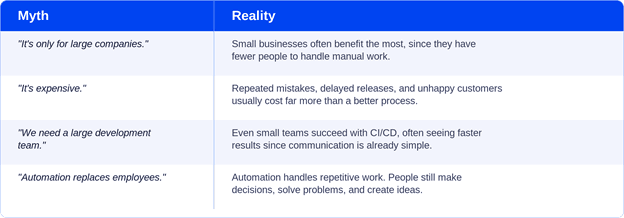
Common Myths About CI/CD
Many businesses avoid CI/CD because of a few common misunderstandings. Here's a quick look at the myths next to the reality.
How to Get Started
You don't need to change everything overnight. A simple approach works best:
• Review your current release process
• Identify tasks that repeat every week
• Automate one task at a time
• Introduce automated testing
• Keep releases small and regular
• Measure the results
• Keep improving the process
Small improvements made consistently lead to long term success.
How Kenora Helps Businesses
At Kenora, we believe technology should make business easier, not more complicated. We help companies build modern software delivery processes that reduce risk and improve productivity.
From planning and development to automated testing, cloud deployment, and system integration, our team builds solutions that match the way your business actually works. Every company is different, so we focus on practical solutions instead of one size fits all approaches.
Whether you're building a new platform, improving an existing application, or modernizing your development process, our goal is to help you deliver better software with confidence.
Final Thoughts
CI/CD is often described as a technical process, but its biggest impact is on people and businesses. It helps teams communicate better, reduces unnecessary stress, improves software quality, and delivers value to customers faster. Most importantly, it builds a culture of continuous improvement.
Businesses that succeed in today's fast moving world aren't always the ones with the biggest budgets or the largest teams. They're the ones that can adapt, improve, and respond quickly when opportunities appear. CI/CD gives businesses that ability.
It's not just about releasing software faster. It's about building a smarter, more reliable way of working that benefits developers, managers, customer support, sales teams, and business leaders alike. When every department works together through a smooth delivery process, technology becomes more than a tool: it becomes a true driver of business growth.
If your business is looking for a better way to deliver software, reduce manual work, and support future growth, now is a great time to start building a modern CI/CD process. Small improvements today can create lasting success tomorrow.