
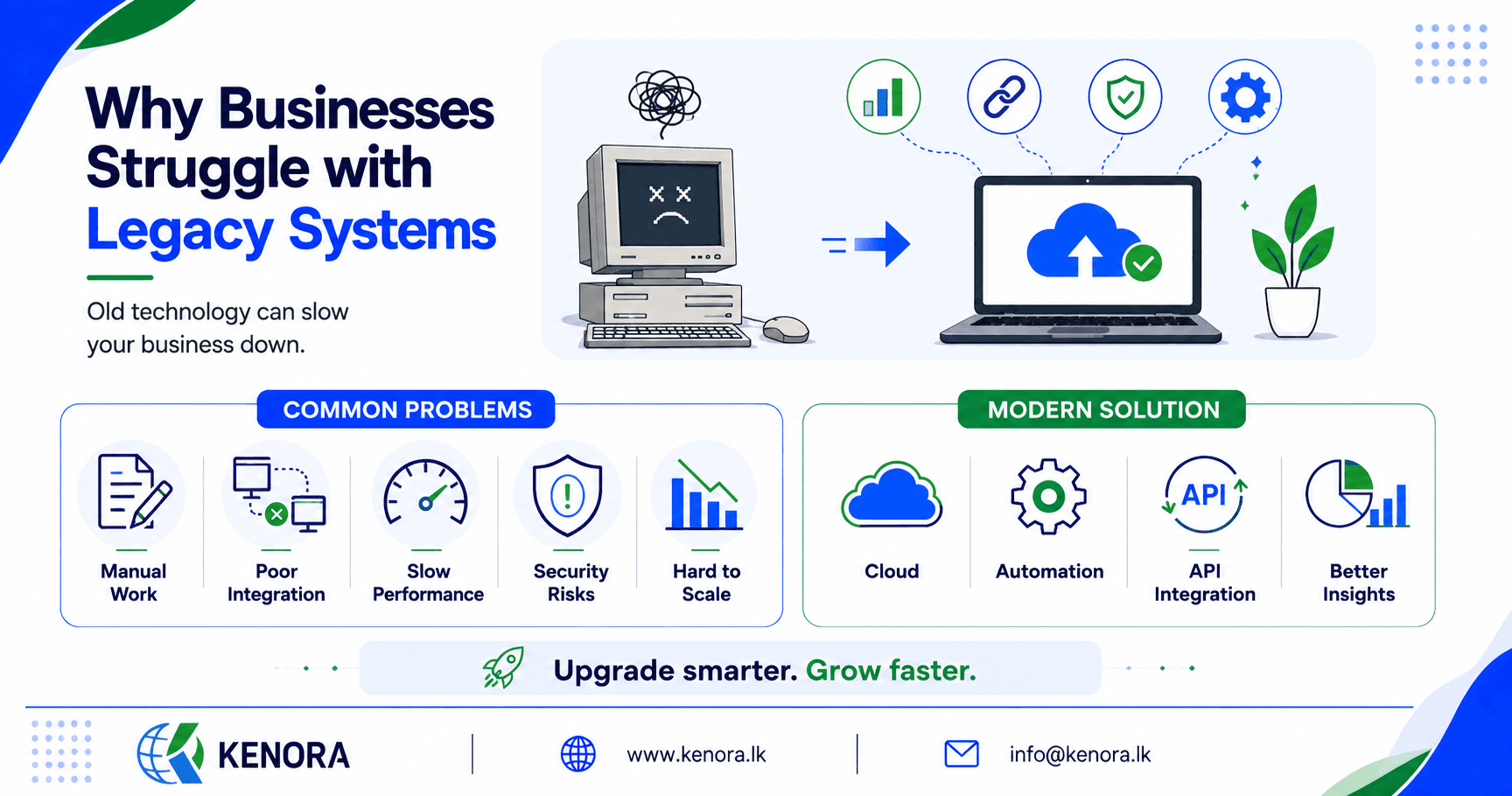
Why Businesses Struggle with Legacy Systems (And How to Modernize Them)
Technology moves fast. Cloud tools, automation, and AI now let companies work faster and smarter than ever. Yet a surprising number of businesses are still running on systems built years, sometimes decades, ago. We call these legacy systems, and they quietly hold a lot of companies back.
A legacy system isn't necessarily broken. Often it still does its job and helps staff get through the day. The trouble is that it was designed for a different era. As a business grows, as customers expect more, and as technology keeps advancing, an old system simply can't keep pace.
Most business owners know their software is outdated. They keep it anyway, because replacing it feels expensive, risky, or like more trouble than it's worth. That caution feels safe in the short term, but holding on to old systems for too long usually ends up costing far more down the road.
Here's a closer look at why legacy systems trip up so many businesses, and what you can do about it.
What Is a Legacy System?
A legacy system is any software or piece of technology that's been in use for a long time. It might still function fine, but it wasn't built with today's business needs in mind. Some common examples:
• A desktop application that only runs on one computer
• An accounting tool that can't connect with your other software
• A customer database that has to be updated by hand
• A business process still managed through spreadsheets instead of proper software
• Software that no longer gets updates or security patches
Companies often stick with these systems because employees already know how to use them. That comfort feels convenient today, but it can turn into a real problem tomorrow.
Why Businesses Keep Using Old Systems
There's usually more than one reason a company puts off upgrading its technology.
Cost is the big one. Many owners assume replacing their software means a huge investment. Fear plays a role too: employees worry about learning something new, while managers worry about the business grinding to a halt during the switch.
Sometimes it's simpler than that: the system still works, so why fix what isn't broken? And some businesses depend on custom software built by a developer who is long gone, which makes any change difficult without the right support.
These reasons all make sense on the surface. But they tend to hide the bigger risks that come with staying on outdated technology for too long.
The Hidden Costs of Legacy Systems
Old systems can look cheap because they're already paid for. In reality, they create hidden costs every single day:
• Employees spend extra time entering data by hand
• Information gets copied back and forth between different systems
• Reports take longer to put together
• Mistakes happen more often
• Customers wait longer for updates
• Managers struggle to get accurate information about the business
None of these look serious on their own. But add them up over a year, and you're often looking at hundreds of lost work hours.
Poor Integration Creates Extra Work
Most businesses today rely on several different tools at once: customer management software, accounting systems, email platforms, payment processors, inventory tools, and online stores. When these systems can't talk to each other, someone has to move the information manually.
Picture a simple order. A customer buys something online. Someone copies that order into the accounting system. Someone else updates inventory. A third person prepares the invoice. Every one of those manual steps is a chance for something to go wrong.
With modern integration, all of that happens automatically, saving time and cutting down on errors.
Slow Systems Reduce Productivity
Employees want tools that help them get through their work quickly. Old software tends to do the opposite: it loads slowly, takes extra clicks, and turns simple tasks into a small chore.
A few extra minutes of waiting might not sound like much. But multiply that across dozens of employees, every single day, and productivity takes a real hit. Instead of focusing on customers or growing the business, staff end up waiting on their software.
Security Risks Continue to Grow
Cybersecurity matters more now than ever, and this is where legacy systems fall dangerously behind. Many no longer receive security updates. Some still run on operating systems their makers stopped supporting years ago. That leaves an open door for cyber attacks.
On top of that, outdated software makes it harder to meet modern security requirements and the expectations customers now have. Protecting customer data should always come first, and old systems make that job much harder than it needs to be.
Limited Access to Business Data
Good decisions depend on good information. Modern systems give you dashboards, reports, and real time data at a glance. Legacy systems, on the other hand, often make reporting a headache.
Managers can end up waiting hours, sometimes days, just to pull together numbers from different departments. Without accurate, timely data, businesses make slower decisions and miss opportunities they should have caught.
Difficult to Scale
Technology should grow alongside your business. A small company might handle a hundred customers just fine on an older system. But what happens when that number grows to a thousand, or ten thousand?
Legacy systems tend to struggle under that kind of weight. Performance drops. More manual work creeps in. New employees need extra training just to work around the system's limits. Instead of supporting growth, the system becomes the thing standing in its way.
Higher Maintenance Costs
Old technology usually costs more to keep running than people expect. Replacement parts for aging servers get harder to find. Developers who understand outdated programming languages charge a premium, if you can find them at all. Unexpected failures happen more often, and emergency fixes always cost more than planned upgrades.
Many business owners are surprised to learn that maintaining old software can end up costing more, over a few years, than building a modern solution from the ground up.
Better Customer Experience Starts with Better Systems
Customers expect fast, accurate service and a smooth experience online. When employees are stuck working with slow systems, that difference shows: delayed orders, incorrect invoices, long response times, missed updates.
Every interaction a customer has reflects the systems working behind the scenes. Modern technology helps a business deliver a better experience from the very first contact all the way through long term support.
How to Modernize Without Disrupting Your Business
Modernizing doesn't mean tearing everything down and starting over. Most successful companies take it one step at a time:
• Identify the biggest problems first
• Replace the systems causing the most delays
• Connect existing software through APIs wherever possible
• Move services to the cloud gradually
• Automate repetitive tasks
This step by step approach keeps risk low while still delivering real improvements early on.
Choosing the Right Technology Partner
Modernizing a legacy system takes more than buying new software off the shelf. It takes careful planning and a real understanding of how your business actually works.
A good technology partner takes the time to learn your business before recommending anything. Instead of pushing features you don't need, they focus on solving the problems that are actually costing you time and money. That approach helps a company cut costs, work more efficiently, and prepare for the growth ahead.
Final Thoughts
Legacy systems helped plenty of businesses succeed in the past. But they shouldn't be allowed to hold back the future. Technology is supposed to make work easier, not harder.
If your team spends too much time on manual tasks, if your systems can't work together, or if security and performance have started to worry you, it might be time to modernize.
The good news is that you don't have to do it all at once. Small, well planned improvements can add up to real results over time.
At Kenora Technologies, we help businesses modernize outdated systems, streamline workflows, connect software, and build solutions built for long term growth. Our goal is simple: help you spend less time fighting your technology, and more time growing with it.